

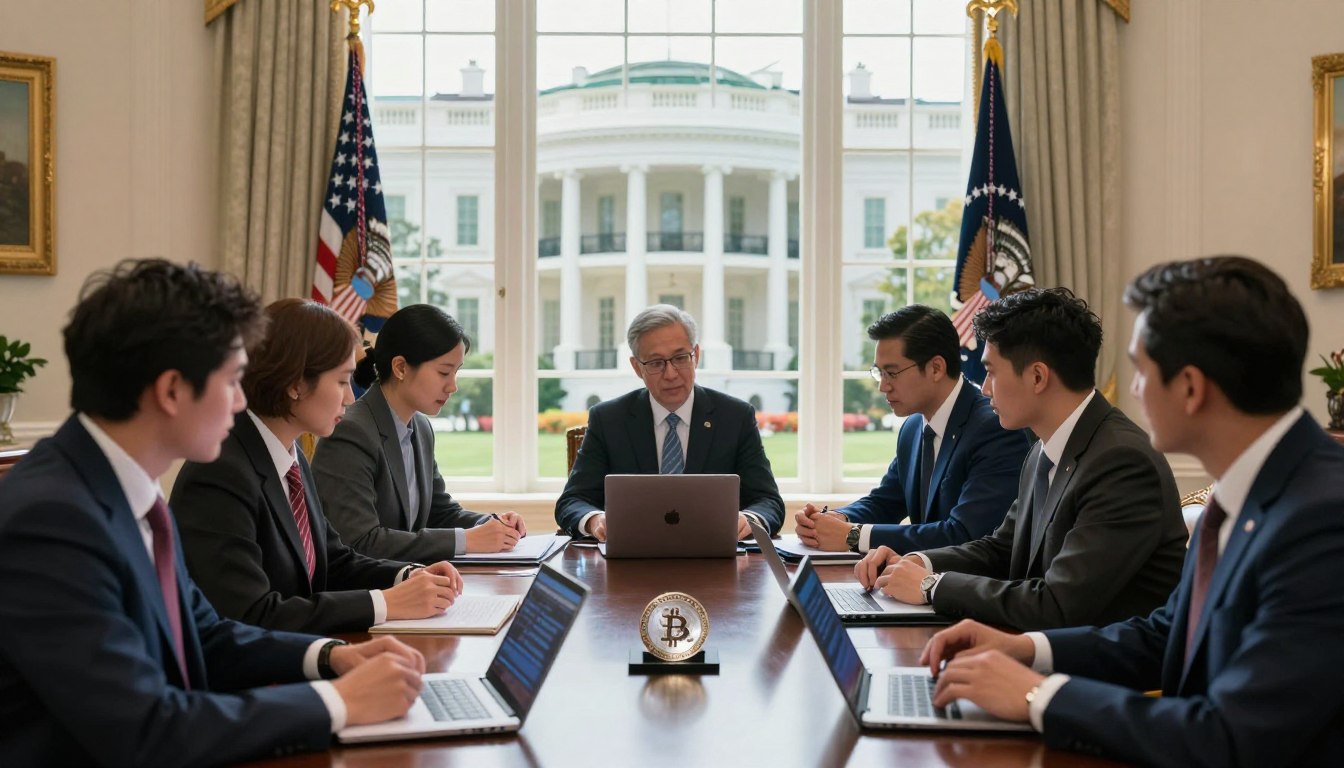
Trump’s two headline White House crypto gatherings are both in the past, and no future summit is scheduled. The CLARITY Act is a proposed federal digital-asset market-structure bill intended to clarify how SEC and CFTC oversight applies to digital assets. Readers looking for a date also need to know what each gathering did, and what it did not change. The March summit focused on a bitcoin reserve and a possible acquisition strategy. A later White House meeting put pressure on Congress to pass a digital-asset bill. Neither gathering, by itself, made proposed legislation law. The dates below distinguish the two events, while the policy details explain why they matter and where the debate stands.
Key Takeaways
- Both headline White House gatherings have already taken place.
- The first summit announced a Strategic Bitcoin Reserve.
- The later meeting urged Congress to pass a fair CLARITY Act.
- The bill passed the House but remained stalled in the Senate.
- Regulatory headlines do not predict crypto prices on their own.
A meeting date is only the calendar answer, not a sign that legislation has become law.
When Is Trump’s Crypto Summit?
The calendar has two completed White House dates to distinguish: March 7, 2025, and August 19, 2026. The first was the first White House Crypto Summit; the later date was a separate high-profile White House crypto meeting. No future Trump crypto summit is scheduled as of October 29, 2026.
The difference matters if you are trying to attend. Neither the March event nor the August meeting is an upcoming appointment, and there is no scheduled public summit for visitors to plan around. The dates refer to completed gatherings, not a recurring event with a published timetable.
Treat both dates as completed events, not future appointments.
The March gathering was formally called the first White House Crypto Summit. The August event was described as a White House meeting, not a second summit. Both involved crypto policy, but the later meeting had its own focus and participants.
Search results and news coverage may use “Trump crypto summit” broadly for either gathering. The exact event name helps separate the March summit from the later meeting, especially when checking a date or a policy announcement.
As of October 29, 2026, the White House had not scheduled another Trump crypto summit. A new announcement could change that calendar, but the two dates above are the completed events to distinguish. Treat both dates as completed events, not future appointments.
What Did Trump Announce at the First Summit?
The first summit put the administration’s approach in view through a reserve announcement and a separate instruction about possible acquisitions. President Donald Trump and Crypto Czar David Sacks spearheaded the March 7, 2025, gathering. The announcements set out a government strategy, but they did not promise new spending to buy bitcoin.
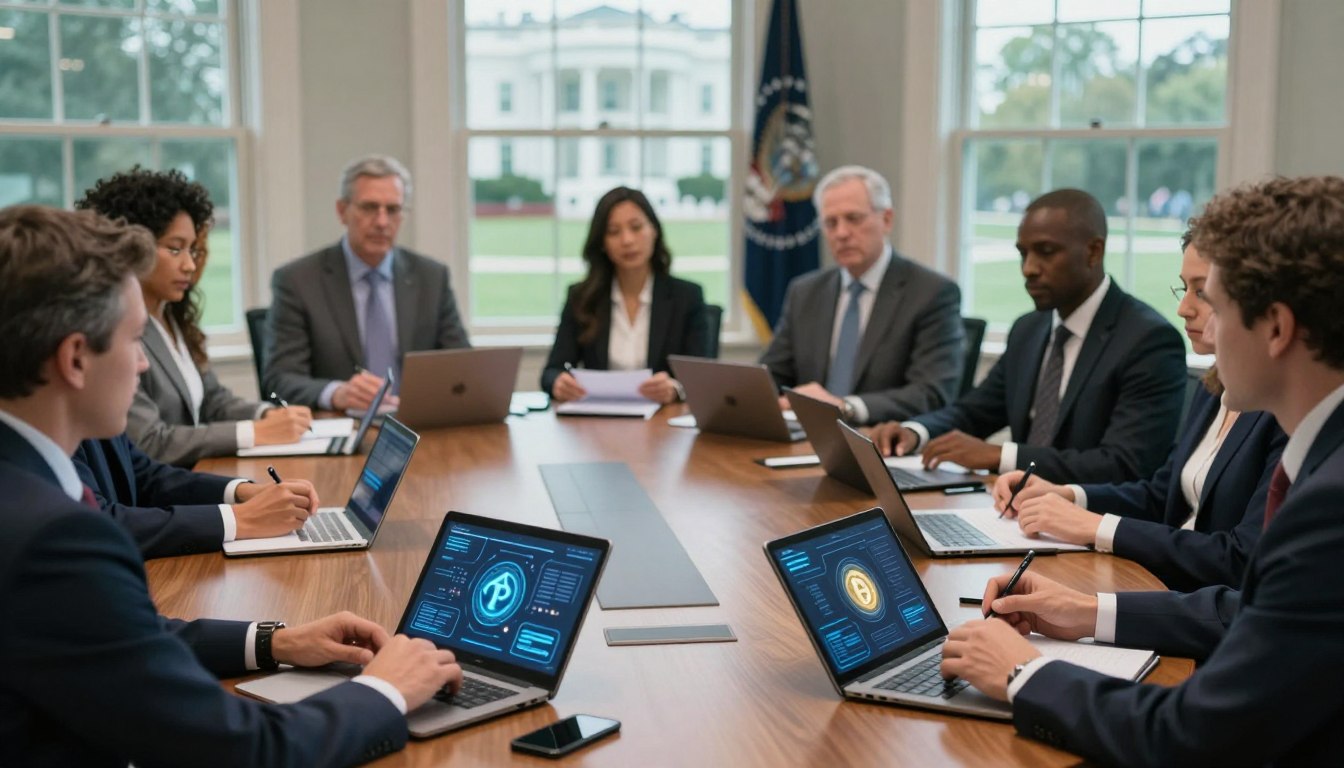
Attendees included Coinbase CEO Brian Armstrong, Ripple CEO Brad Garlinghouse, MicroStrategy’s Michael Saylor, and Gemini’s Winklevoss brothers. Their presence brought executives from exchanges, payment networks, investment firms, and crypto companies into the White House conversation.
A reserve seeded with seized bitcoin
Trump announced an executive order launching a Strategic Bitcoin Reserve. It would be seeded with bitcoin already seized by the government, rather than with bitcoin bought for the reserve through a new appropriation. The distinction matters because seized assets and newly allocated federal money are different sources.
The order also established a broader Digital Asset Stockpile. That stockpile was separate from the bitcoin reserve and covered other digital assets held by the government. The announcement described two holdings, not one combined account with identical rules for every asset.
The reserve and stockpile put digital assets into the administration’s public policy strategy. They did not settle how Congress or regulators would handle the wider market, including which companies would face securities or commodities oversight.
The budget-neutral acquisition instruction
Trump separately instructed the Commerce and Treasury secretaries to explore acquiring bitcoin in a budget-neutral manner. That instruction asked officials to examine possible methods; it did not announce a completed purchase or a fixed buying schedule.
Budget-neutral means the exploration was not framed as a request for new appropriations to fund purchases. The instruction left officials to consider ways an acquisition might avoid adding new spending, rather than promising a particular financing method or result.
That is why the reserve announcement and acquisition instruction should not be collapsed into a single claim. One created a reserve seeded with seized bitcoin, while the other asked officials to explore possible budget-neutral acquisition. Do not describe the budget-neutral instruction as a commitment to buy bitcoin with new appropriations.
What Happened at the 2026 White House Meeting?
Roughly two dozen people gathered at the Eisenhower Executive Office Building, including crypto executives, a traditional-finance leader, and federal regulators. The August 19, 2026, meeting brought parts of the digital-asset industry and government together. Trump urged Congress to pass a “fair version” of the CLARITY Act.
The White House had not released an official agenda. The public policy message centered on legislation and U.S. competitiveness, rather than a published list of decisions or commitments from the room.
Crypto, finance, and regulators in the room
The named attendees represented trading platforms, financial-market infrastructure, and federal oversight. Their roles show the range of interests present, but attendance alone does not establish agreement on a specific rule.
| Group | Named attendees | Role represented |
|---|---|---|
| Digital-asset platforms | Vlad Tenev, Robinhood; Arjun Sethi, Kraken | Retail trading and crypto exchange leadership |
| Traditional finance | Jeffrey Sprecher, Intercontinental Exchange | Financial-market infrastructure |
| Federal regulators | Paul Atkins, SEC; Mike Selig, CFTC | Securities and commodities oversight |
SEC Chair Paul Atkins and CFTC Chair Mike Selig represented the agencies with roles in securities and commodities oversight. Their attendance placed regulators in the same discussion as the companies and financial-market leader affected by future rules.
Trump’s message on the CLARITY Act
Trump called on Congress to pass a “fair version” of the CLARITY Act. He argued that clearer rules could help the United States compete with China and support innovation. The message backed a federal framework, but it did not mean Congress had passed the bill.
The administration’s emphasis was on having rules that clarify how digital assets fit within U.S. oversight. For the crypto industry, that framework could affect how companies operate and which regulator oversees different activity. The meeting did not resolve those details.
What the meeting did and did not decide
The meeting showed that the White House wanted legislative action and that regulators were part of the discussion. A call for Congress to act is different from a vote, a signed law, or a final agency rule.
The absence of an official agenda also limits what can be stated about the meeting’s purpose beyond its known participants and public message. Do not treat the absence of a published agenda as proof that the meeting produced a specific regulatory commitment.
What Is the CLARITY Act’s Status and What Happens Next?
The CLARITY Act remains stalled in the Senate as of October 27, 2026, even though the House passed it in 2025. The bill, H.R. 3633, sets out a federal digital-asset market-structure framework. Full Senate action had not advanced, and cloture requires 60 votes.

The House passed the bill 294-134 in 2025. The Senate Banking Committee advanced it 15-9 in May 2026, but committee action did not guarantee a floor vote. Republicans held 53 Senate seats in the reported scenario, below the 60 votes needed for cloture.
The bill’s progress and Senate hurdle
Cloture is a Senate procedure used to limit debate and move toward a vote. The 60-vote threshold makes bipartisan support important, even when a party holds a simple majority. It is a hurdle, not a prediction of the bill’s final outcome.
| Institution | Route | Documented step | Timing or status |
|---|---|---|---|
| Congress | Legislation | House passed the CLARITY Act 294-134; Senate action stalled | As of October 27, 2026 |
| SEC | Rulemaking | Proposed rules for some crypto offerings | August 18, 2026 |
| CFTC | Advisory process | Inaugural committee meeting with three 50-minute panels | August 20, 2026, 1:00 p.m.-4:00 p.m. |
| OCC | Stablecoin rules and licensing | Rules planned and applications to be processed | Rules by November; applications from January |
The issues holding up agreement
Negotiations have included several questions that could shape the bill’s oversight framework and the conduct of companies. Three areas of dispute are:
- Ethics restrictions for public officials and their financial interests.
- Whether stablecoins may offer yield and under what conditions.
- How DeFi rules address sanctions and anti-money-laundering duties.
The ethics debate has added scrutiny because Trump’s family made around $2.3 billion from crypto ventures between mid-2024 and April 2026. That figure has raised questions about possible restrictions and conflicts of interest. It is not, by itself, a legal finding that any law was broken.
Agency action alongside Congress
Congress is not the only route for regulation. The SEC proposed rules for some crypto offerings on August 18, 2026. The CFTC’s Innovation Advisory Committee held its first meeting two days later, with panels on crypto assets, AI in trading compliance, and prediction markets.
The Office of the Comptroller of the Currency, or OCC, planned to finalize stablecoin rules by November and begin processing crypto license applications in January. Over 18 months, the OCC received 40 charter applications, more than half involving digital-asset activity. That was an eightfold increase from the prior administration.
The GENIUS Act is a separate law, enacted in July 2025, that established a federal stablecoin framework. Agency proposals and plans can change with an administration, while enacted legislation remains in effect until Congress changes it. A 60-vote cloture threshold is a procedural hurdle, not proof that the bill will ultimately become law.
What Do the Summits Mean for Crypto Rules and Markets?
Policy headlines can influence expectations, but they do not determine crypto prices on their own. A White House meeting can signal policy direction, while legislation and agency rules shape the framework over time. A summit cannot by itself establish a bull run or explain every market move.
Three distinct factors can affect crypto market activity:
- Regulatory clarity, which can change how companies and investors assess rules.
- Macroeconomic conditions, including Treasury activity and changes in yields.
- Institutional demand, which can be measured in part through ETF flows.
U.S. spot Bitcoin ETFs recorded $853.54 million in inflows in the week ending August 7, 2026. BlackRock’s IBIT accounted for $693 million. Those figures were a measurable demand signal, not proof that a White House event caused buying or a price increase.
At the same time, Treasury bond buyback plans and lower yields supported a wider move in risk assets. That broader backdrop affected more than crypto, so it would be misleading to attribute the whole market move to a White House meeting.
Treat a summit headline as one signal, not a standalone price forecast.
For readers tracking investment news, policy and flows answer different questions. A rule proposal can signal how regulators may approach an activity, while ETF data can show recent fund demand. Neither turns a past meeting into a reliable forecast for tokens or future returns.
Stablecoins and other digital assets may respond to their own market conditions, too. A broad policy signal does not remove differences among assets, companies, or products. Keep the meeting’s policy message separate from the wider forces that move markets.
Conclusion
The key takeaway is that Trump’s White House crypto gatherings have happened, while the debate over durable rules continues. The March reserve announcement and the later push for the CLARITY Act were distinct policy moments. Neither one, on its own, settled how the full market will be regulated.
For a practical update, check official White House announcements alongside notices from Congress, the SEC, the CFTC, and the OCC. Those channels can confirm a new meeting date or a formal policy step. Check official White House and agency announcements before treating a rumored summit date or policy change as confirmed.
FAQ
Will the Clarity Act be passed?
Passage is uncertain, and the CLARITY Act remained stalled in the Senate as of October 27, 2026. The House passed it, and the Senate Banking Committee advanced it, but full Senate action had not moved forward. Cloture requires 60 votes, so the bill needs enough support to clear that procedural hurdle. Committee approval alone does not make it law.
Will we see a crypto bull run in 2026?
A White House summit cannot establish a crypto bull run, and no meeting can guarantee future prices. Market direction can reflect regulatory expectations, broader economic conditions, and sustained demand from investors. Treasury activity and yields can affect several risk assets at once. ETF flows offer one measure of institutional demand, but a single week does not settle what markets will do next.
What is the prediction for Trump crypto?
The administration’s policy direction has supported a clearer U.S. framework for digital assets, but that is not a prediction about token prices. Trump has backed a federal market-structure bill and called for Congress to pass a fair version. Those positions signal a policy approach; they do not establish how any cryptocurrency will perform or what future returns might be.
What are the upcoming crypto events in 2026?
The OCC planned to finalize stablecoin rules by November and begin processing crypto license applications in January. The CFTC Innovation Advisory Committee’s August 20 meeting has already passed. No future Trump crypto summit is scheduled as of October 29, 2026. Agency schedules can move, so a planned regulatory step is distinct from a confirmed public meeting or completed rule.
What’s the difference between the CLARITY Act and the GENIUS Act?
The CLARITY Act addresses broader digital-asset market structure and how SEC and CFTC oversight applies. The GENIUS Act is a separate law that established a federal framework for stablecoins when it was enacted in July 2025. One is a proposed bill covering market structure, while the other is already enacted and focused on stablecoins.
If you want to dig further into how technology affects religion faith in digi, read our How Technology Affects Religion Faith in Digi guide.
If you want to dig further into what is latest wifi technology wi-fi 7 explai, read our What Is Latest WiFi Technology Wi-Fi 7 Explai guide.
If you want to dig further into trenches and new technology impact on world w, read our Trenches and New Technology Impact on World W guide.